
How to keep doing the sport you love as you get older: Ian’s story

Meet one of our Runlates Shrewsbury regulars - Ian. Hear from him how working on his running (and walking) technique and practicing Reformer Pilates has helped him keep running and competing in the triathlons that he loves.

If you’ve spent most of your life being active, the idea of “slowing down because you’re getting older” probably isn’t particularly appealing.
You might have played rugby, run marathons, competed in triathlons, cycled, swum, climbed, walked or simply enjoyed being outdoors. You know that staying active makes you feel better, both physically and mentally, and you have no intention of giving it up just because the years are passing. But your body does change.
Old injuries can start to make themselves known again, recovery can take longer, and strength, mobility, balance and coordination become increasingly important. Sometimes the thing you have always loved doing starts to become harder than it used to be.
So how do you keep doing the sports and activities you enjoy for as long as possible? For Ian, the answer has involved looking at the bigger picture: not simply doing more running or training harder, but working on how his body moves, building strength and maintaining mobility alongside his sport.
At 66, Ian is still competing in triathlon and has his sights set on continuing for at least another ten years. And yes, his strategy for doing so includes Reformer Pilates!
From rugby to triathlon
Ian has been active for most of his life. He played rugby for around 25 years, accumulating the sort of collection of injuries you might expect: knee, back and shoulder problems among them.
Around 20 years ago, he turned his attention to triathlon. Having already been a keen runner, he found that combining swimming, cycling and running gave him a new challenge. He went on to compete at Great Britain age-group level and completed full-distance triathlons, including running a sub-40-minute 10K off the bike.
But years of sport and previous injuries had taken their toll. His lower back and right knee were becoming increasingly problematic and running was becoming harder and harder. As Ian explains:
“The big problem I was getting was particularly running. It was becoming harder and harder for me to run and it was becoming painful to actually run. My problem with my low back and right knee were compounding each other to the extent that I was getting to the stage where I was basically shuffling, running rather than running.”
At his best, Ian had been able to run a sub-40-minute 10K in a triathlon. He had dropped to well over 50 minutes and was beginning to contemplate whether he could continue running at all.
That was the point at which he decided that simply trying to manage the symptoms wasn't enough. He needed to look at how he was actually moving when he ran.

Sometimes the answer isn't to train harder
One of the things Ian found particularly valuable about Running Technique Coaching was starting with the basics.
When we looked at his running, it became clear that the problem wasn't simply what happened when he was running fast, his walking mechanics needed attention too. His foot placement, landing and push-off were all contributing to the way he moved, alongside a lack of dynamic movement through the hip and shoulder.
So rather than immediately trying to run further or faster, we worked backwards, looking at how the feet, hips and rest of the body were working together before gradually increasing the speed and applying those changes to running. Ian describes the process as:
“A superb structured training process. I’ve got to learn to walk correctly, and then obviously from walking correctly, you can then start to run correctly.”
He can recognise the difference himself now. When he starts to slump through his hips and return to a shuffling running style, he notices it, and rather than simply pushing through, he knows what to do.
“All I need to do is to know: run correctly, even if it means slowing down to start with, run properly with correct technique, and all of a sudden I start speeding up again, and it actually feels easier.”
That is an important lesson for anyone who wants to keep running as they get older. More isn't always better. Sometimes moving more efficiently is the thing that allows you to do more.
Why Reformer Pilates?
Ian actually isn't new to Pilates. He first started doing Pilates around 20 years ago, including Reformer Pilates, but for a period of around ten years he lived somewhere without access to a Reformer studio. He continued with matwork, but found that something was missing.
One of the benefits of working with an instructor, particularly when you have years of experience yourself, is having someone else look at what you're doing. Even experienced athletes can develop compensations, habits and movement patterns that gradually creep in without them realising. And as Ian says, sometimes you need another pair of eyes:
“I’ve seen physios and a lot of physios over the years, but you need somebody who can actually look at my running and go, right, let’s sort my running out.”
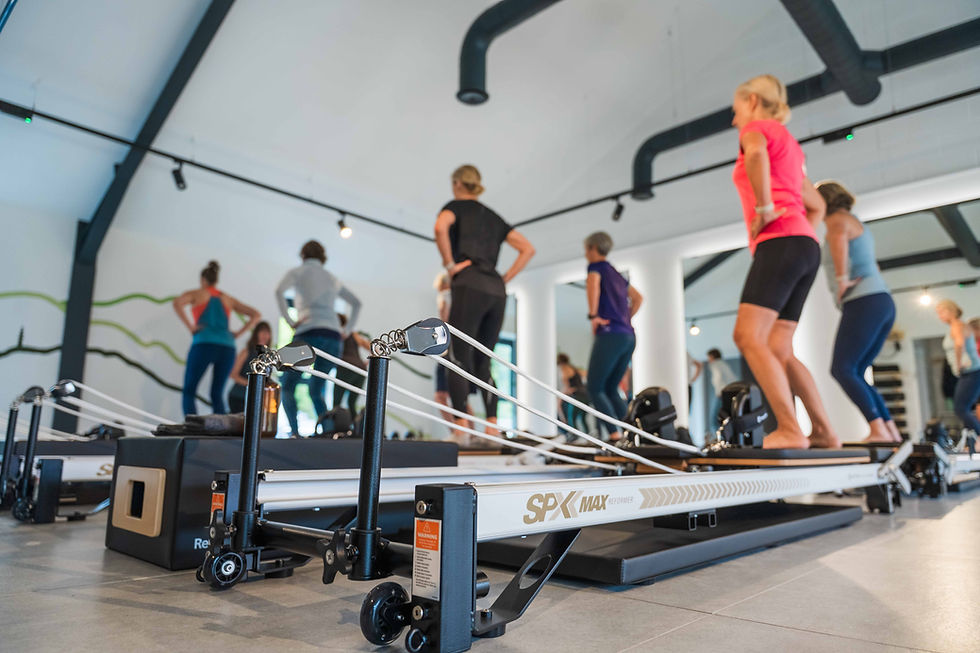
The same principle applies to Pilates. Reformer Pilates isn't simply about following a series of exercises. The equipment provides resistance and assistance through the springs, while the instructor can adjust exercises and cues according to the person in front of them.
For someone with a long history of sport and previous injuries, that ability to work progressively and supportively can be particularly valuable.

Building strength that carries over into sport
One of the biggest changes Ian has noticed since returning to regular Reformer Pilates is his core strength. He describes feeling much more upright and able to find and maintain his centre when running.
He's also noticed a difference on the bike. Previously, he struggled to maintain an aerodynamic position for long periods during triathlon. As his core strength has improved, he has found that position more comfortable, and he has noticed changes in his swimming too.
For Ian, this is where Pilates becomes more than simply another form of exercise. It's helping to support the other things he actually wants to do. That might be the most useful way to think about strength and mobility training as an athlete gets older.
You aren't necessarily training so that you can become better at Pilates. You're training so that you can keep doing the things you love.
“But isn't Pilates a bit… easy?”
This is probably one of the biggest misconceptions about Reformer Pilates, particularly among people who are used to traditional sports training.
Pilates can look deceptively gentle from the outside. The focus is on controlled movement, strength, stability, mobility and coordination rather than heavy weights or working to 'failure'. You are training your brain as much as your body, to rebuild more efficient movement patterns and that takes concentration, and time.
Because the Reformer uses springs, the resistance can be adjusted to suit different people and different levels of ability to add or remove challenge. The equipment also supports you to get into positions that may prove difficult with body weight alone, allowing you to work on mobility and flexibility tension free.
That means someone with decades of sporting experience can work alongside someone who is completely new to Pilates, while both can be challenged appropriately. It isn't about how how fit or strong you may be, it's about moving in a way that feels good for body and mind that will stay with you long after the class finishes.
Why strength and mobility become increasingly important with age
As we get older, maintaining strength, mobility and coordination becomes increasingly important, particularly if we want to remain active. That doesn't mean giving up the activities we enjoy and replacing them with “gentler” exercise. Quite the opposite. It means considering what our bodies need alongside the activities we love.
For a runner, that might mean strength and mobility work alongside running. For a cyclist, it might mean improving strength, control and movement through areas that spend a lot of time in a fixed position. For a swimmer, it could mean developing better control through the trunk and hips.
Ian has noticed this outside of sport too. Previously, walking for more than a couple of kilometres could cause his hip to become painful. Now he finds walking much easier, and perhaps most importantly, he's enjoying running again.
“For me, staying active is absolutely critical. If I’m sidelined, either through injury or illness, I start to feel much, much worse. If I can’t keep active, I will try anything to keep active, and that for me means probably a couple of hours a day. Because of triathlon, I will run, swim or bike two of those most days, six days a week.”
You don't have to be a “Pilates person”
If you've never tried Reformer Pilates, you might have an image in your head of what Pilates is. Perhaps it's something for people who already do yoga, perhaps you think it's mainly about stretching. Or perhaps, particularly if you're a man who has spent years playing sport, lifting weights or training for endurance events, you simply don't see how Pilates could be relevant to you.
Ian's story is a useful reminder that Pilates doesn't replace the sports you enjoy. It can support you to do them.
At 66, after decades of rugby, running and triathlon, Ian isn't doing Reformer Pilates because he's decided to take things easy. He's doing it because he wants to keep doing the things he loves. And his goal hasn't changed. He's still hoping to continue competing in triathlon for at least another ten years.
Training for longevity, not just performance
There is a natural tendency in sport to focus on performance: how fast did you run, how far did you cycle, what was your pace, how many races did you complete? But as an athlete gets older, another question becomes just as important:
What do I need to do now so that I can still be doing this in five, ten or twenty years?
That might mean changing how you train, paying more attention to recovery, addressing an old injury rather than continually working around it, improving your running technique, or adding strength, mobility and controlled movement to your training through something like Reformer Pilates.
None of that means you're giving up on performance. It means you're thinking beyond your next race. You're thinking about the next decade.
The goal isn't to become younger. It's to keep doing what you love.
Ian's story isn't really about Pilates. It's about independence, movement and longevity. It's about being 66 and still wanting to compete, having spent decades being active and not being ready to stop.
And perhaps most importantly, it's about finding ways to keep enjoying the activities that make you feel like yourself.
For Ian, that currently means Reformer Pilates, Running Technique Coaching, swimming, cycling and running. And hopefully plenty more triathlons.
Because getting older doesn't have to mean becoming less active. Sometimes it simply means becoming a little more thoughtful about how you train to stay active.
FAQs
Is Reformer Pilates suitable for older athletes?
Yes. Reformer Pilates can be adapted to different abilities and training backgrounds, making it suitable for people who want to maintain strength, mobility, stability and coordination as they get older. It can also complement sports such as running, cycling, swimming and triathlon.
Is Reformer Pilates suitable for men?
Absolutely. Reformer Pilates isn't gender-specific and can be particularly useful for men who participate in sport and want to develop strength, control, mobility and efficient movement alongside their usual training.
Can Reformer Pilates help runners?
Reformer Pilates can complement running by developing strength and control around the core, hips and legs, while also working on mobility and coordination. It doesn't replace running, but can form a useful part of a balanced training programme.
Final thoughts
If there's one thing I'd love you to take away, it's this - if there is a sport or activity you love and you worry about how long you can continue, consider whether Pilates can support you to keep going!
Many of our clients like Pilates, but they LOVE running, cycling, tennis, golf, pickleball, hiking... and that's ok! Think of it as maintenance if you like, to help keep your bones strong, your joints oiled, and your muscles flexible. It's about giving yourself the best chance to keep doing all the things you love for years and years to come!
Keep moving.
Whether your next step is a walk around the block, your first Pilates class or training for your next race, I hope this article has encouraged you to keep working on your movement so you can continue to do the things you love.
If you think we might be able to help you get started, we'd love to welcome you to the Runlates community. Get in touch for a chat to tell us what you'd like to achieve!
Vic
Founder, Runlates
Published: October 2026
About the author
Victoria Gidney is the founder of Runlates in Shrewsbury. As a Pilates instructor and certified running technique coach, her focus is on improving mobility, building strength and helping people stay active so they can continue doing the things they love.


Comments